Diesel Fuel Tank Heater — Keep Diesel Flowing When Temperatures Drop
Only 8 in stock
Your diesel engine can't start if the fuel won't flow. Below 32°F (0°C), wax crystals begin forming inside your diesel tank — slowly clogging your fuel filter, choking your fuel lines, and leaving your truck, tractor, or generator dead in the cold at the worst possible moment.
The VVKB Zeus-F3 diesel fuel tank heater stops the problem at the source. A 50W PTC heating element installs directly inside your fuel tank and warms the diesel before it ever reaches the filter or injectors. The fuel flows. The engine starts. You move on.
CE, RoHS, and FCC certified. Compatible with any diesel system running on 12V or 24V.
Why Diesel Fuel Gels — And What It Actually Costs You
Diesel fuel starts forming wax crystals at 32°F (0°C) — long before your thermometer hits what most people consider "dangerously cold." By -4°F (-20°C), those crystals have thickened enough to block your fuel filter completely. Your engine starves for fuel and shuts down.
There are two separate problems happening in your tank at low temperatures. First, the waxy hydrocarbons naturally present in diesel solidify and clump together. Second, any trace moisture dissolved in the fuel freezes and turns the filter paper into a solid block of ice.
Both failures produce the same result: no fuel reaches the injectors, and the engine won't start — or starts and dies minutes later.
The real cost isn't just the repair bill. A semi truck stuck roadside in January means a missed delivery window, a tow that runs $300–$500 or more, and hours of lost time. A farm tractor that won't start in harvest season means crops sitting in a field. A backup diesel generator that fails during a power outage means exactly the wrong kind of surprise.
A 50W fuel tank heater running all night costs you less than $0.30 in electricity. A single tow call costs you 1,000 times that.
How the VVKB Diesel Fuel Tank Heater Works
The Zeus-F3 is an in-tank heater — the heating element sits directly inside your fuel tank, submerged in diesel. That direct contact means the fuel warms up fast, with no heat lost through tank walls or fuel lines.
The element uses PTC (Positive Temperature Coefficient) technology. PTC material is self-regulating: as the diesel temperature rises, the electrical resistance of the element increases automatically, drawing less power. When the fuel is warm enough, the heater pulls minimal wattage. When temperatures drop again, it ramps back up. No thermostat needed. No risk of overheating.
Here's what happens in practice: you plug in the heater before or during cold weather, the diesel in your tank stays above the wax formation threshold, and by the time you turn the key, every drop of fuel moving toward your filter and injectors is already at operating temperature.

One important distinction: this heater warms the diesel inside your tank. It does not burn fuel to produce heat — that's a completely different product category (diesel air heaters or parking heaters). The Zeus-F3 draws 50W from your 12V or 24V electrical system and uses that power entirely to keep your fuel fluid.
Product Specifications
| Specification | Detail |
|---|---|
| Input Voltage | 12V / 24V DC |
| Rated Power | 50W |
| Heating Technology | PTC (self-regulating) |
| Installation Location | Inside fuel tank (in-tank) |
| Element Lifespan | 10,000 hours |
| Compatible Fuel | Diesel, biodiesel |
| Certifications | CE, RoHS, FCC |
| Warranty | 1 year |
| Shipping | Free |
The 10,000-hour element lifespan means you get roughly 5–6 full winters of daily use before the heating element needs replacing — assuming 6 hours of operation per day across a 5-month cold season. Most users replace the entire unit as a precaution every 3–4 years.
The 50W power draw is the same as a small LED work light. On a standard truck alternator or a running generator, you won't notice it on your electrical system at all.

Who Needs a Diesel Fuel Tank Heater
If you run any diesel-powered equipment through winter, this heater belongs in your fuel tank. These are the four situations where a frozen fuel tank costs you the most.
Semi Trucks & Commercial Fleets
A fuel-gelled semi truck in January isn't just a mechanical problem — it's a missed delivery window, a breach of contract, and a $400+ tow bill before 6am. Your truck runs a tight schedule. Your fuel system needs to match.
If you're operating in the northern US, Canada, or any region that drops below 20°F (-7°C) regularly, summer-blend diesel in your tank is a liability from October through March. The Zeus-F3 keeps your fuel above the wax formation threshold overnight, so the engine fires on the first turn of the key.
Farm Tractors & Agricultural Equipment
Harvest doesn't wait for warm weather, and neither does planting season. If your tractor won't start at 5am, you're losing daylight you can't get back — and calling a mechanic to a remote field in winter is a slow, expensive process.
Farm equipment sits idle for long periods between uses, which makes cold-start gelling even more likely. The Zeus-F3 installs directly into your tractor's fuel tank and keeps diesel fluid whether the machine runs daily or sits for a week between jobs.
Diesel Generators
A backup generator that fails to start during a power outage defeats its entire purpose. Diesel generators are particularly vulnerable to fuel gelling because they often sit unused for months — and the first time you need them is usually during a winter storm.
The Zeus-F3 runs on your generator's own 12V or 24V system, or on any external DC power source. Keep it connected during cold months and your generator starts on the first attempt, every time.
RVs, Camper Vans & Boats
Winter camping and cold-weather cruising push your diesel system harder than summer use ever will. When your RV or boat sits overnight in sub-freezing temperatures, fuel gelling is a real risk — especially if you're running winter-blend diesel at the edge of its rated temperature range.
The Zeus-F3 draws only 50W, making it practical to run overnight on your house battery bank without draining it. Wake up to an engine that starts, not one that needs a fuel system bleed.
In-Tank vs Inline vs Filter Heater — Which One Do You Need

There are three ways to heat diesel fuel before it reaches your engine. Each installs at a different point in your fuel system and solves a slightly different problem.
| In-Tank Heater | Inline Fuel Heater | Filter Heater | |
|---|---|---|---|
| Where it installs | Inside the fuel tank | Between tank and filter | Around the filter housing |
| What it heats | All fuel in the tank | Fuel moving through the line | Fuel at the filter only |
| Works when engine is off | ✓ Yes | ✗ No | ✗ No |
| Prevents gelling at source | ✓ Yes | Partial | Partial |
| Best for | Cold-start prevention | Additional line protection | Frozen filter emergencies |
| VVKB model | Zeus-F3 (this product) | Zeus-F2 | Zeus-F1 |
The in-tank heater is the only solution that works before the engine starts. Inline and filter heaters only activate once fuel is already flowing — which means they can't help you on a cold morning when the tank itself has gelled overnight.
For most trucks, tractors, and generators operating in consistently cold climates, the Zeus-F3 in-tank heater is the right starting point. If you're in an extreme cold region — below -22°F (-30°C) — pairing it with a filter heater gives you full coverage from tank to injector.
Frequently Asked Questions
Is this the same as a diesel air heater that burns fuel to heat my cab?
No — these are two completely different products. A diesel air heater (parking heater) burns diesel as fuel to generate heat for your cab or living space. The Zeus-F3 does not burn anything. It uses 50W of electricity from your 12V or 24V system to warm the diesel already sitting in your tank, so it flows properly to your engine. One produces heat for people. The other keeps fuel fluid for your engine.
At what temperature does diesel fuel start to gel?
Diesel begins forming wax crystals at around 32°F (0°C) — this is called the Cloud Point. By 14°F (-10°C), those crystals are dense enough to clog a standard fuel filter. Summer-blend diesel gels faster than winter-blend, so if you filled up in October and temperatures dropped in November, your fuel may already be at risk. The Zeus-F3 keeps diesel above the Cloud Point regardless of outside temperature.
Will the heater drain my battery overnight?
It won't — the Zeus-F3 is not designed to run overnight. In cold weather, you use it in both situations: on during normal driving to keep fuel warm while the engine runs, and switched on a few minutes before you start the engine each morning to warm the fuel above the gelling threshold before cranking. At 50W and 4.2A, a few minutes of pre-start warm-up has negligible impact on your battery, and while driving, the alternator handles the load with no issue.
Is it safe to put an electrical element inside a fuel tank?
Yes — PTC heating elements are specifically designed for immersion in diesel fuel. The Zeus-F3 operates at low wattage and low surface temperature. PTC technology means the element cannot overheat: as the fuel warms up, the element's resistance increases and power draw drops automatically. The unit is CE, RoHS, and FCC certified and has a 10,000-hour rated element lifespan.
Do I need the 12V or 24V version?
Most light-duty trucks, RVs, and tractors run 12V systems. Heavy-duty semi trucks, large diesel generators, and most commercial equipment run 24V. Check your battery voltage — a 12V system has one 12V battery or two 6V batteries in series; a 24V system typically has two 12V batteries in series. The Zeus-F3 is available in both voltages; running the wrong voltage will damage the unit.
Can I use it on a diesel generator?
Yes, and generators are one of the best use cases for this heater. Backup generators often sit unused for months, then get called on during a winter power outage — exactly when fuel gelling is most likely. Connect the Zeus-F3 to the generator's own 12V or 24V starting battery and run it during cold months. Your generator will start on the first pull when you need it most.
Does it work with biodiesel blends?
Yes. The Zeus-F3 is compatible with standard diesel and biodiesel blends up to B20. Biodiesel has a higher Cloud Point than petroleum diesel — it starts gelling at warmer temperatures — so if you're running B20 or higher, activate the heater earlier in the season, around 40°F (4°C) rather than waiting for freezing temperatures.
Winter doesn't give you a warning before your fuel gels. The Zeus-F3 costs less than a single tow call — and it lasts 10,000 hours.
CE, RoHS, and FCC certified. Free shipping. 1-year warranty.

Vvkb Diesel Tank Heater
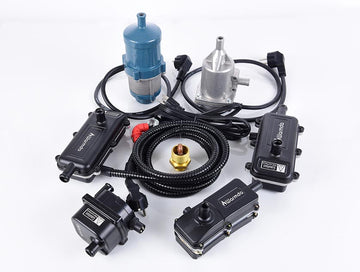
The Zeus-F3 heating element is machined from aluminum and houses a PTC heating core. The aluminum body transfers heat directly into the surrounding diesel — fast, efficient, and rated for 10,000 hours of operation.