


The Titan-P6 is an in-line coolant heater with no pump. It plugs into a wall outlet, heats the coolant in a small aluminum tank, and lets convection carry that heat into your engine. If your engine has no frost plug you can reach — or you would rather not pull one — this is the way around it.
Inline Coolant Heater vs Block Heater: Which One Do You Need
A block heater screws into a frost plug hole and heats the metal of the block directly. An inline coolant heater sits outside the engine, plumbs into two coolant hoses, and heats the coolant instead. Both end up warming the same engine — they just get there differently.
You will see this style sold under half a dozen names: in line coolant heater, inline block heater, engine coolant heater, tank heater, antifreeze heater, circulating heater. They all describe the same external heat-the-coolant approach, and the Titan-P6 is the version that does it without a pump.
You want the inline route when any of these are true:
- Your engine has no usable frost plug. Many modern diesels and transverse-mounted engines simply do not give you one. Owners hit this constantly on VW TDI blocks.
- The frost plug is there but buried. If reaching it means pulling a starter, a motor mount or an exhaust manifold, an external heater is a two-hour job instead of a two-day one.
- You want the cab warm too. An inline heater circulates coolant through the block and the heater core, so your defroster has something to work with when you get in.
- You want it removable. A frost-plug heater is permanent. A tank heater comes back out with two hose clamps.
Stick with a frost-plug block heater when you already have an easy port, want zero extra plumbing, and do not care about cab heat.
What Size Do You Need — Match the Wattage to Your Coolant Capacity
Size an inline coolant heater by how much coolant you have to heat, not by engine displacement. Your owner's manual lists cooling system capacity in quarts or litres; that is the number that matters.
| Cooling system capacity | Titan-P6 wattage | Typical vehicles |
|---|---|---|
| Under 16 qt (15 L) | 500W | ATVs, snowmobiles, small marine engines, small gensets, compact cars |
| 16–25 qt (15–24 L) | 1000W | Pickups, SUVs, vans, compact tractors, mid-size gensets |
| 26–40 qt (25–38 L) | 1500W | Heavy pickups, large tractors, medium trucks, large gensets |
| Over 40 qt (38 L) | Move up to a pumped model | Class 7–8 trucks and heavy equipment — see the Titan-P5 |
These bands match how the whole industry sizes tank heaters, so you can cross-check them against anything else you are looking at. When you land between two bands, take the larger one — an oversized heater simply cycles off sooner.
No Pump Means Thermosiphon — Here Is What That Costs You
The Titan-P6 has no pump because it does not need one to move coolant. Heat the coolant in the tank and it rises on its own; cooler coolant drops in behind it to take its place. That loop keeps running for as long as the element is on.
What you gain is a heater with no moving parts. Pump bearings are the usual failure point on circulating heaters, and there is nothing here to seize, leak at a shaft seal, or draw current. On top of that, every serviceable part of the P6 can be replaced by you — it is the only Titan model built that way.
What you give up is speed. Convection moves coolant far more slowly than a pump does, so a no-pump heater needs longer to reach the same coolant temperature. Our pumped models — the Titan-P3 and Titan-P5 — do the job in 30 to 60 minutes. Plan on longer with the P6.
It also means installation is unforgiving. A pumped heater will push coolant through a mediocre hose run. The P6 will not. Read the next two sections before you buy anything.
Where to Plumb It: Both Ends Must Be on the Engine Side of the Thermostat
This is the single most common reason a coolant heater "does not work." Your thermostat is closed when the engine is cold. Anything you tee into on the radiator side of that thermostat is sealed off from the block until the engine is already warm — which is exactly when you no longer need the heater.
So both ends of the heater loop go on the engine side:
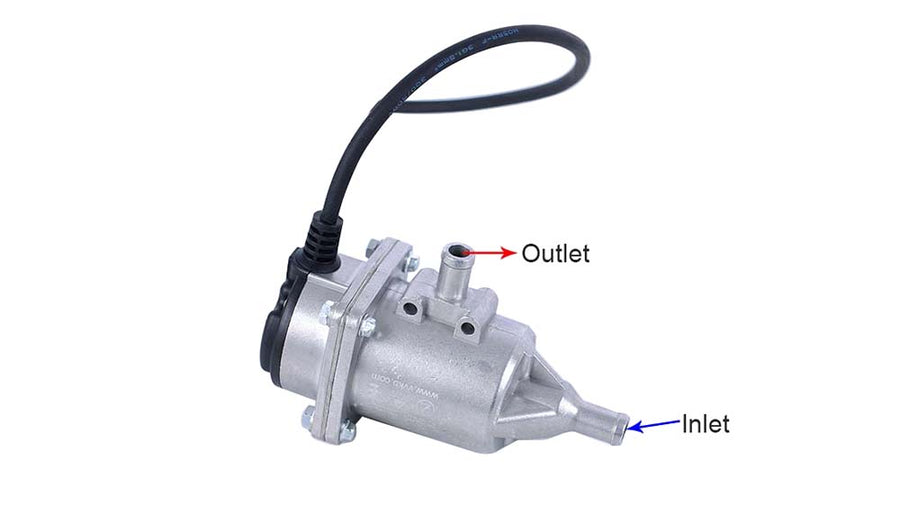
- Inlet — draw from a low point on the block. The block drain port or the suction side of the water pump both work. Do not tap the water pump outlet.
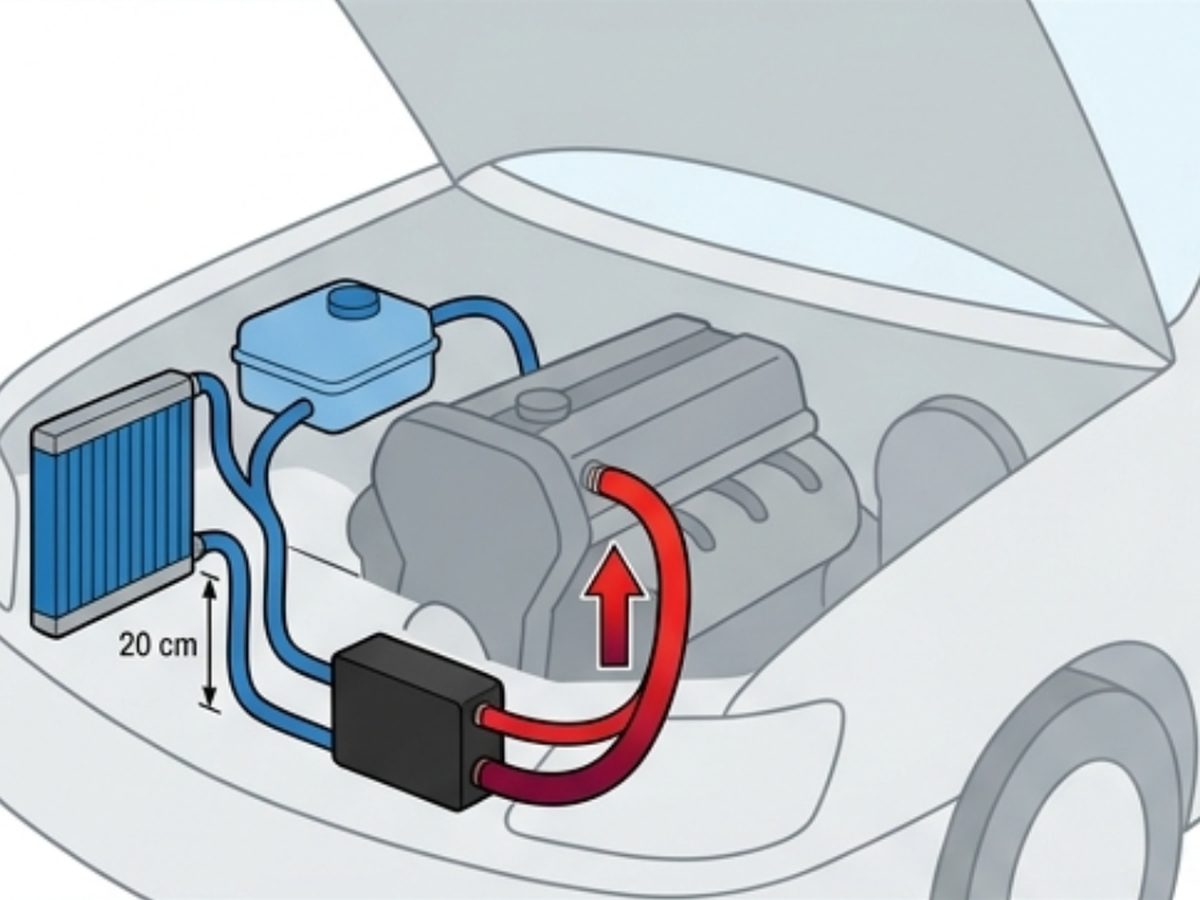
- Outlet — return to a higher point on the engine. The cabin heater hose circuit is the usual choice, because it is fed straight off the block and bypasses the thermostat entirely.
Two more traps worth knowing. Do not create a shortcut that is an easier path than going through the engine, or you can upset circulation once the engine is running. And a lower radiator hose is a poor tap point on most vehicles — it slopes up toward the radiator, so you end up heating the radiator instead of the block.
Mount It Low and Run the Return Hose Uphill
Convection only flows in one direction: up. Four rules follow from that, and every one of them is a real-world failure you can avoid for free.
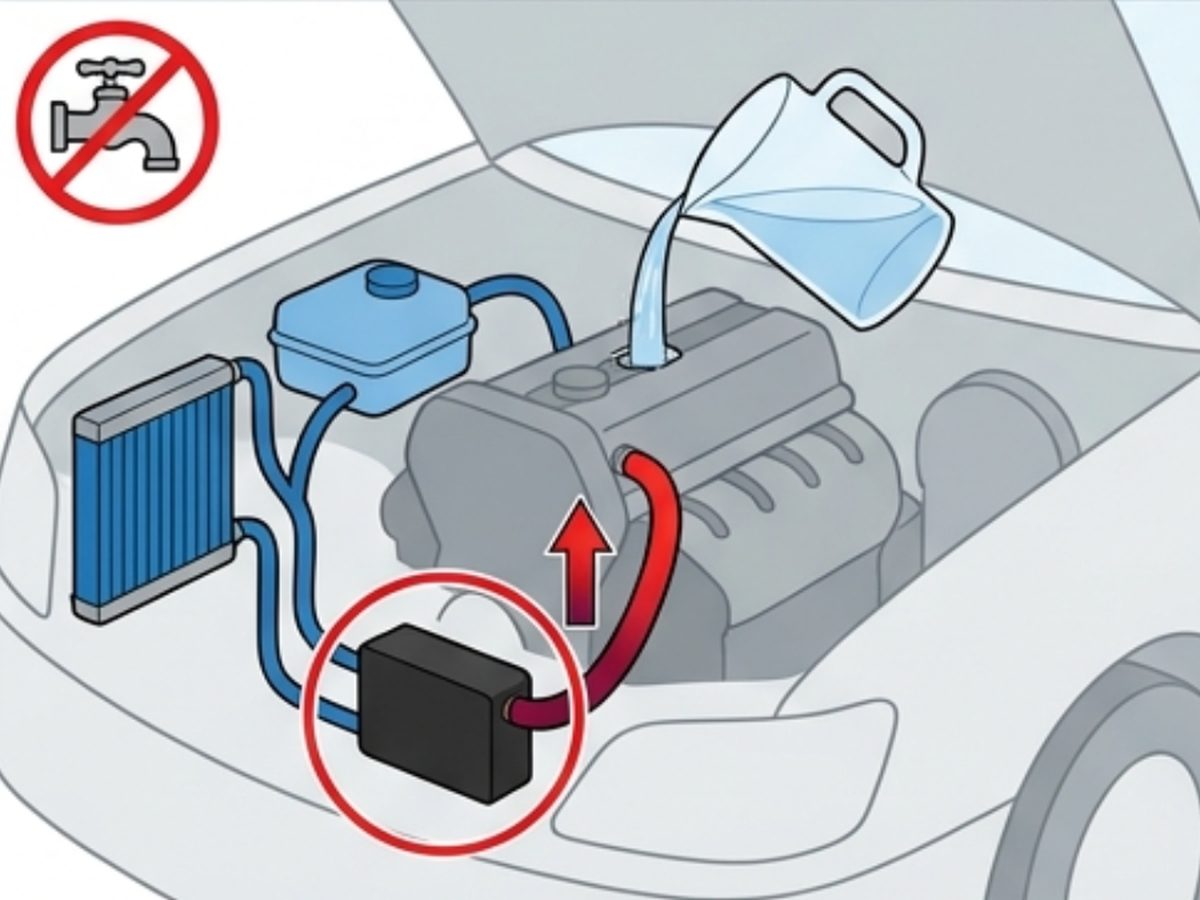
- Mount the heater below the lowest point of the coolant jacket. The lower it sits, the more rise the loop has and the harder it pulls. A heater mounted high will barely circulate at all.
- Point the outlet barb up, or tilt it upward. The outlet is the short barb beside the mounting bracket. The tapered inlet barb sits at the low end. Get these the wrong way round and the loop never starts.
- Give the return hose a continuous rise to the engine. No dips, no bellies, no high spot followed by a drop. A single sag traps air and stops the loop dead — this is the classic airlock, and it is the number one install complaint on every tractor and truck forum.
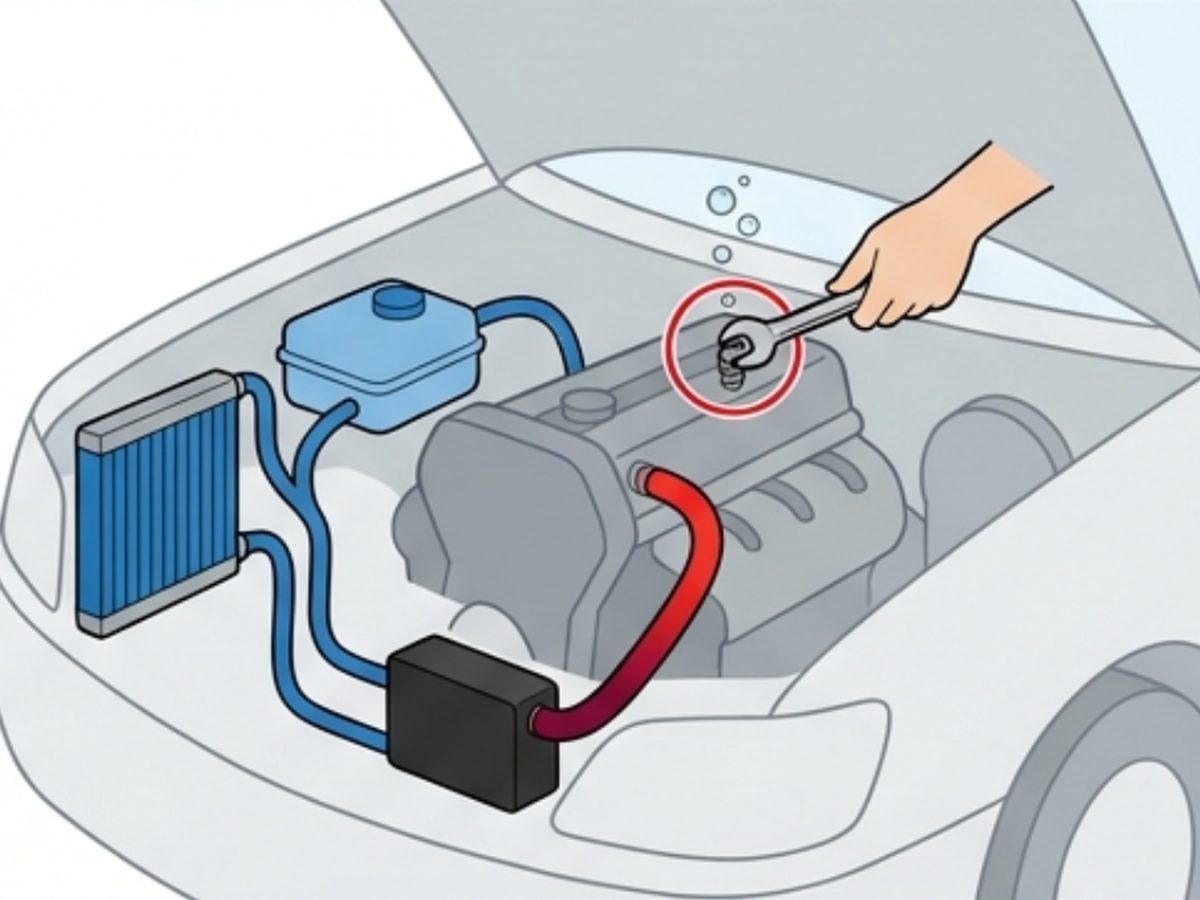
- Bleed all the air out before you power it up. Trapped air is what kills heating elements, and it usually happens right after installation rather than years later.
Three more things. Keep the heater and its hoses at least 4–6 in (10–15 cm) away from fuel lines. Never start the engine while the heater is still plugged in. And mix your coolant with distilled water, not tap water — minerals leave deposits on the element.
Parallel Install Using the Two Supplied Tee Fittings
The Titan-P6 installs in parallel, not in series, and the two tee fittings you need come in the box. You are not cutting the hose and putting the heater in the middle of the flow path — you are tapping two points and giving the heater its own convection loop between them.
There is a check valve inside the P6 for the same reason. It keeps coolant moving toward the outlet if air ever finds its way into the heater or the hoses, so the loop does not stall in reverse.
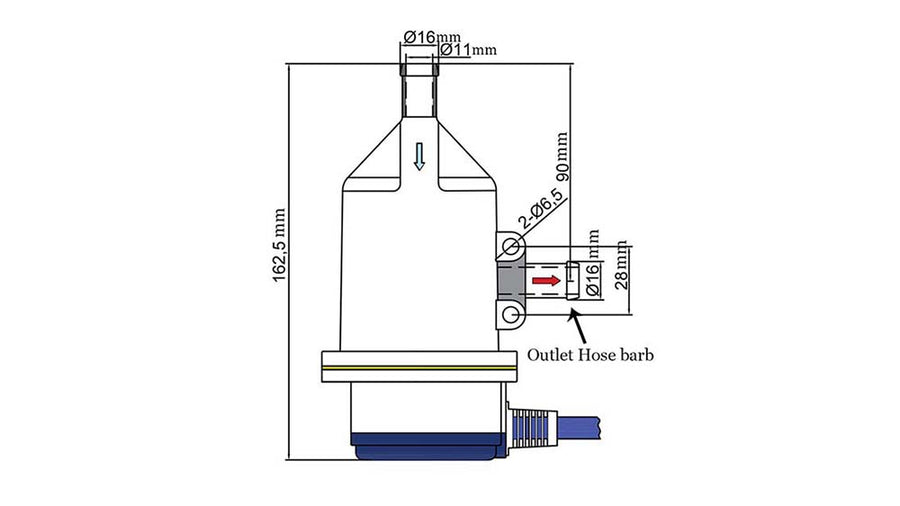
The barbs are 5/8" (16 mm), which is the standard heater hose size on most trucks, tractors and cars. Adapters for 3/4" and 1" hose are available — select them when you order, as they are not included.
Measure before you buy. At 6.4 in (162.5 mm) long, the Titan-P6 needs real room on a frame rail or firewall. A frost-plug heater lives inside the block and takes no bay space at all — this one does not.
How Long to Plug It In
Start with two hours before you leave and adjust from there. There is no single correct number, because it depends on your coolant volume, how cold it is outside, and where you mounted the heater.
| Vehicle | Starting point |
|---|---|
| Compact car, ATV, small genset | 1.5–2 hours |
| Pickup, SUV, van, compact tractor | 2–3 hours |
| Large tractor, medium truck, large genset | 3–4 hours |
Test it over your first few cold mornings and settle on the shortest time that gives you a clean start. Past roughly four hours you are paying for electricity that is no longer buying you anything.
A timer pays for itself in the first month. A 1500W heater on all night costs several times what the same heater costs on a three-hour window. Buy a timer rated for at least 15 amps for a 1500W unit — undersized timers are the ones that cook their contacts by mid-winter. A block heater timer guide covers the sizing in more detail.
You Do Not Need to Reach Full Operating Temperature
Most cold-start engine wear happens in the first thirty seconds, before oil pressure has pushed lubricant everywhere it needs to go. You do not have to reach the 176–203°F (80–95°C) of a running engine to fix that.
Coolant in the 86–122°F (30–50°C) range already cuts start-up wear substantially, and the benefit starts the moment heating begins — warmer coolant means thinner oil and better lubrication straight away. The P6's thermostat cuts power at 149°F (65°C) and restores it below 113°F (45°C), which is comfortably above what your engine actually needs.
Inside the Titan-P6
- Stainless steel heating tube — sits directly in the coolant, transfers heat fast, rated for 8,000 hours of service.
- Die-cast aluminum body — one piece, no seams to weep, and it sheds road salt and impact better than plastic housings.
- Ceramic thermostat — cuts out at 149°F (65°C), cuts back in at 113°F (45°C), and does it without you touching anything.
- Built-in check valve — keeps coolant moving toward the outlet even if air gets into the loop.
- IPX4 rated — takes splashing water from any direction, which is what an engine bay actually throws at it.
- Every part user-replaceable — the P6 is the only Titan model where you can service the whole unit yourself rather than replacing it.
The design dates from 1996 and it is the first product Vvkb ever built. Thirty years later the layout has not needed changing, because there is nothing in it that wears out on a schedule.
Full Specifications
| Specification | Titan-P6 |
|---|---|
| Type | Electric inline coolant heater, no pump (thermosiphon) |
| Rated voltage | 110V or 230V AC (the 230V unit runs on 220V–240V mains) — this is not a 12 volt heater |
| Rated power | 500W / 1000W / 1500W |
| Frequency | 60Hz / 50Hz |
| Thermostat | Single ceramic thermostat — off at 149°F (65°C), on below 113°F (45°C) |
| Heating element | Stainless steel tube, 8,000-hour rated life |
| Housing | Die-cast aluminum alloy |
| Inlet / outlet | 5/8" (16 mm) barbs; 3/4" and 1" adapters available separately |
| Overall length | 6.4 in (162.5 mm) end to end |
| Outlet position | 3.5 in (90 mm) from the inlet end, on the bracket side |
| Mounting | Two Ø6.5 mm holes on the integral bracket |
| Weight | 2.2 lb (1 kg) |
| Ingress protection | IPX4 |
| Installation | Parallel, using the two supplied tee fittings |
| Warranty | One year |
What's in the Box
- Titan-P6 inline coolant heater with power cord
- Two tee fittings — you need both for a parallel install
- Eight hose clamps
- Mounting hardware
- Warranty card and instructions
Eight clamps is more than the job strictly needs, and that is deliberate — you get spares rather than a trip to the parts store halfway through the install.
What This Is Not
Buying the wrong category is the most expensive mistake in vehicle heating, so here is what the Titan-P6 is not.
- Not a 12 volt engine block heater. It runs on household mains power, 110V or 230V. If you are looking for something that runs off your 12V battery with the engine off, you want a diesel heater instead.
- Not a cabin heater. It warms coolant. Your cab gets warmer only as a side effect, once the engine is running and the heater core has hot coolant to work with.
- Not a pumped circulating heater. If your hose routing cannot give you a low mount and a continuous uphill return, buy a heater with a pump. The Titan-P4 and Titan-P5 handle that job.
- Not a jacket water heater for standby power. This is a preheater you plug in for a few hours before starting, not a heater designed to hold an emergency generator at temperature around the clock.
- Not for hazardous locations. There is no explosion-proof rating on any Vvkb heater.
Choosing Between the Titan Models
| Model | Pump | Best for |
|---|---|---|
| Titan-P6 | No — thermosiphon | No frost plug available, or you want a heater with no moving parts |
| Titan-B1 | Yes | Compact cars, ATVs, snowmobiles |
| Titan-P3 | Yes | Trucks, tractors, heavy equipment — 90° ports for tight bays |
| Titan-P4 | Yes | Large trucks — 180° straight-through ports |
| Titan-P5 | Yes | Large trucks and generator sets |
The full range sits on the engine block heater collection page.
Certifications
The Titan-P6 is CE and RoHS certified, and Vvkb engine heaters are tested to IEC 60335-1 by TÜV Rheinland under report 50073775 001. It is a Class I appliance, so the outlet you plug it into must be properly earthed — use a GFCI-protected outlet.
Frequently Asked Questions
The heater gets hot but my engine stays cold. What went wrong?
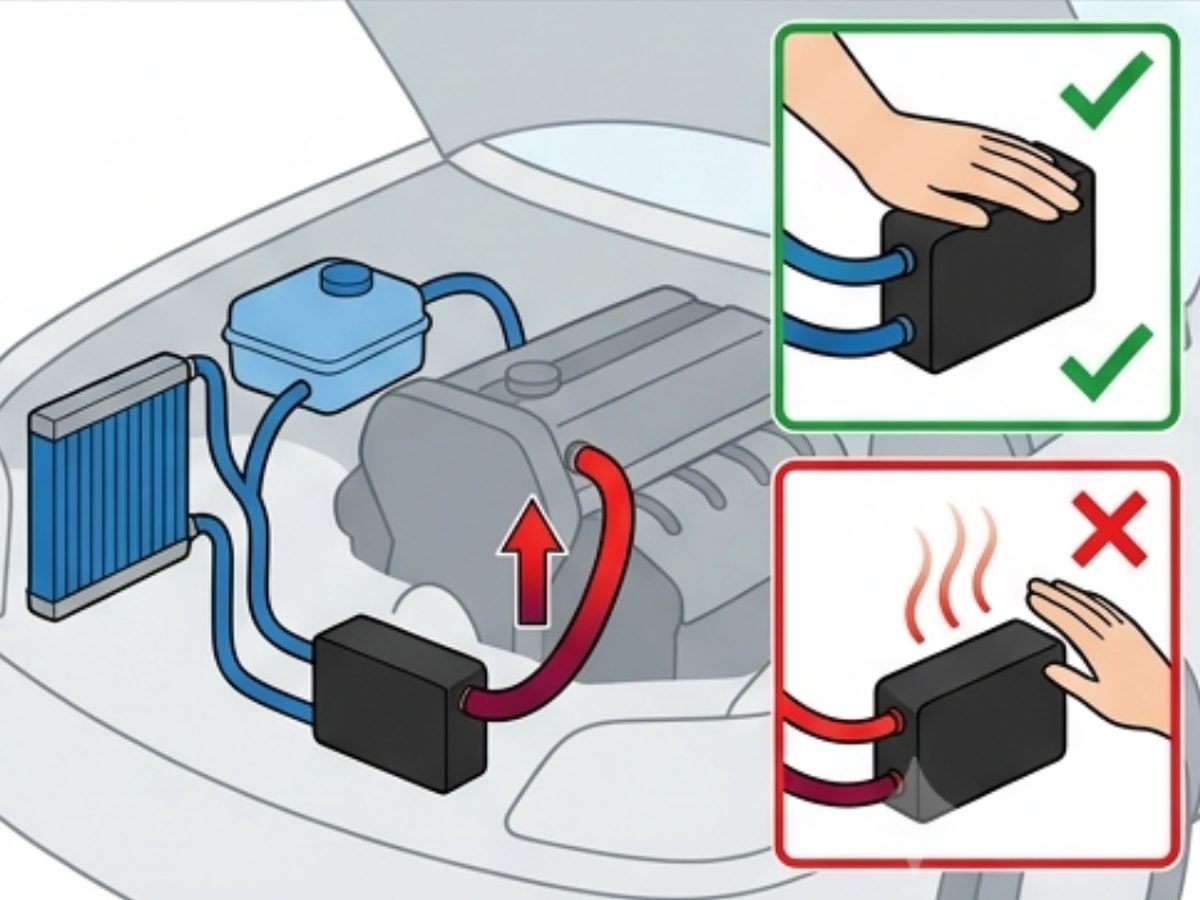
Almost always the mounting height or the hose routing. Check three things in this order: the heater must sit below the lowest point of the coolant jacket, the return hose must rise continuously to the engine with no dips, and all air must be bled out of the loop. A single sag in the return hose is enough to trap air and stop convection completely. Fix the routing before you suspect the heater.
Can I just splice it into the lower radiator hose?
On most vehicles, no. Your thermostat is closed when the engine is cold, which isolates the radiator from the block — so a heater plumbed there heats the radiator and nothing else. Both ends of the loop need to be on the engine side of the thermostat. Draw from the block drain or the water pump suction side, and return into the cabin heater hose circuit.
How long does it take compared with a heater that has a pump?
Longer. Our pumped models reach a useful coolant temperature in 30 to 60 minutes; plan on two to four hours with the P6 depending on how much coolant you are heating. Convection moves coolant slowly, and that is the trade you make for a heater with nothing inside it that can fail. If two hours of lead time does not fit your morning, buy a pumped model.
My engine has no frost plug I can get to. Will this work?
Yes — that is the main reason people buy an inline coolant heater. It never touches the block casting. You tap two coolant hoses, mount the heater low on the frame or a bracket, and the coolant does the rest. This is the standard answer for engines where the freeze plug is missing, blind, or buried behind a mount.
Is it safe to leave plugged in overnight?
The thermostat will cycle it safely, but we do not recommend it. You are running a 1500W appliance unattended for eight to ten hours and paying for heat that stopped helping after hour four. Put it on a timer rated for at least 15 amps and set it to switch on two to three hours before you leave. Always use a GFCI-protected outlet.
Does my coolant mix matter?
Yes, more than most people expect. Run a 50/50 mix and do not go past 60% antifreeze — heavier concentrations transfer heat poorly and are hard on heating elements. Mix your concentrate with distilled water rather than tap water, because dissolved minerals leave deposits on the element over time.
Can I start the engine while it is still plugged in?
No. Unplug it first, every time. Running the engine with the heater energised drives hot coolant across a live element and can produce vapour pockets that damage it. Make unplugging part of the routine before you get in.
Will it work on my tractor or generator?
Yes, provided you can mount it low and route the return hose uphill — that constraint matters more than the machine type. Tractors are usually easy because there is frame space below the engine. Generator sets are easy for the same reason. Size it by cooling system capacity from the table above, and if you are over 40 quarts, move up to a pumped model.
Ready to Order
Pick your wattage from the sizing table and your voltage, and it ships from stock. If you are unsure which band your machine falls into, email your cooling system capacity and we will tell you which one to take.


